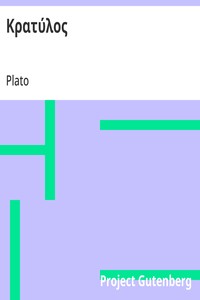
Κρατύλος by Plato
Plato's Cratylus is a dialogue that feels less like a formal lecture and more like eavesdropping on a lively, slightly nerdy debate in an Athenian courtyard. The conversation is framed around a simple, yet profound, question: where do words get their meaning?
The Story
The debate is between two friends, Hermogenes and Cratylus. Hermogenes argues for 'conventionalism' – words are just labels we agree upon by social habit. There's no real reason we call a human a 'human'; we could have just as easily called them a 'zebra' if everyone had agreed. Cratylus, on the other hand, is a hardcore 'naturalist.' He believes words have a natural, inherent correctness. The sounds and letters of a word somehow mirror the essential nature of the thing it names. Socrates is invited to moderate, and he does what Socrates does best: he questions everything. He playfully dissects the origins of dozens of Greek words, from gods and heroes to abstract concepts, trying to see if their etymology supports Cratylus's theory. The discussion twists and turns, often landing in absurdly funny places, as Socrates' word analyses become increasingly creative and dubious.
Why You Should Read It
What I love about this book is how modern it feels. We're still having versions of this argument today in linguistics and philosophy. Reading it, you get this thrill of seeing foundational ideas being worked out in real time. It’s not a dry treatise; it's a messy, inquisitive, and often ironic exploration. Socrates doesn't really give a final answer. Instead, he leaves you thinking. He shows the weaknesses in both extreme positions, suggesting that language is a powerful but imperfect tool for grasping reality. The characters are great – Hermogenes is the pragmatic skeptic, Cratylus is the mystical true-believer, and Socrates is the witty, relentless examiner who won't let either of them get away with a lazy assumption.
Final Verdict
This book is perfect for curious readers who enjoy big ideas served in a conversational package. It's for anyone who's into philosophy, linguistics, or the history of ideas, but is put off by dense academic writing. You don't need a PhD to follow along. Think of it as a stimulating podcast episode from 2,400 years ago. If you liked the conceptual puzzles in Sophie's World or the playful debates in other Platonic dialogues like Euthyphro, you'll get a real kick out of Cratylus. Just be prepared to look at everyday words a little differently afterward.
This historical work is free of copyright protections. Use this text in your own projects freely.
James Davis
6 months agoI decided to give this a try based on a colleague's recommendation, the way the author breaks down the core concepts is remarkably clear. The insights gained here are worth every minute of reading.
John Lopez
8 months agoIt took me a while to process the complex ideas here, but the chapter on advanced strategies offers insights I haven't seen elsewhere. A perfect balance of theory and practical advice.
Barbara Rodriguez
1 month agoThe layout of the digital version made it easy to start immediately, the concise summaries at the end of each section are a lifesaver. I'm glad I chose this over the other alternatives.
Karen Smith
2 years agoThis was exactly the kind of deep dive I was searching for, the nuanced approach to the central theme was better than I expected. Truly a masterpiece of digital educational material.

Richard White
10 months agoFinally found a version that is easy on the eyes.