
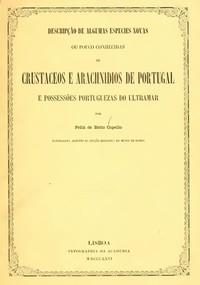
Descripção de algumas especies novas ou pouco conhecidas de crustaceos by Capello
Let's be clear from the start: this is not a storybook. "Descrição de algumas espécies novas ou pouco conhecidas de crustáceos" is a scientific paper published in 1867. There's no plot in the traditional sense. Instead, the 'story' is one of meticulous exploration. Portuguese naturalist Felix António de Brito Capello presents detailed descriptions, measurements, and hand-drawn illustrations of various crustaceans he encountered, many for the first time. Think of it as a field journal. Each entry is a small discovery, a piece of a larger puzzle he was trying to solve: what lives in these waters?
The Story
The narrative is the process of discovery itself. Capello acts as both detective and cataloger. He examines a specimen, notes its unique features—the shape of a claw, the number of segments on a leg—and compares it to what's already known. When he finds something that doesn't match, he gets to name it. The drama is quiet but real. It's in the careful observation, the attempt to bring order to nature's chaos, and the sheer excitement of documenting something new to science. Reading it, you follow his eyes and his hand as he tries to capture these often-overlooked animals on paper for a distant audience that had never seen them.
Why You Should Read It
I loved this book for the human connection it creates. Stripped of modern technology, Capello's work feels profoundly personal and hands-on. You sense his focus and dedication. It makes you appreciate how much effort went into building our basic understanding of biodiversity. It's also a sobering reminder of how much we have already lost; some of these 'new' species he documented may now be rare or gone. This isn't about dry facts. It's about a person reaching into the unknown and saying, "Look at this. This exists." That moment of pure, shared discovery is timeless.
Final Verdict
This book is a niche gem. It's perfect for history of science enthusiasts, marine biology nerds, or anyone who loves primary sources that feel like an adventure log. If you enjoy the quiet thrill of an archive, the beauty of old scientific illustrations, or stories of exploration, you'll find something special here. It's not a casual beach read, but for the right reader, it's a direct line to a fascinating moment in our quest to understand the natural world.
No rights are reserved for this publication. It serves as a testament to our shared literary heritage.





Linda Wilson
2 years agoI have to admit, it provides a comprehensive overview perfect for everyone. This story will stay with me.