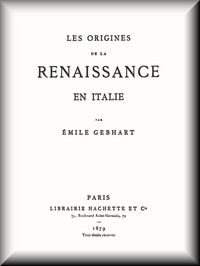
Les origines de la Renaissance en Italie by Emile Gebhart
Emile Gebhart’s Les origines de la Renaissance en Italie is one of those hidden gems that makes you feel like you’ve cracked open a secret door to history. First published in the late 1800s, it’s old-school scholarship, but don’t let that scare you—the writing is lively and almost chatty. Gebhart is less interested in listing every painter or pope and more in asking the big question: why Italy?
The Story
The book doesn’t have a plot like a novel, so think of it as a mystery about history’s greatest art boom. Gebhart has a hunch that the Renaissance didn’t start with a bang—maybe around 1300—but emerged from a messy mix of factors. He looks at Italy’s crumbling Roman ruins, which were just lying around, and says, “People didn’t ignore them—they visited them, stole pieces, and felt inspired.” He also points to the wild politics of the time—popes fighting princes, city-states squabbling, and the Black Death shaking up society. The real kicker? It wasn’t just about art. It was about ideas, religion, and a whole new way of seeing the world—right in the streets of Florence and Rome.
Why You Should Read It
I picked this up thinking I’d get a dry timeline—but no. Gebhart makes you feel like you’re watching a slow explosion. He argues that what made Italy special wasn’t just the ancient stuff, but the fact that everyday people, from monks to merchants, started looking more closely at everything—nature, bodies, sculptures. I loved the part where he talks about how painters started putting real people (not flat saints) into their backgrounds. It sounds small, but it’s huge. And I notice he skips the usual “Renaissance men were geniuses” simpleness. Instead, he shows it was gritty, often violent, and oddly religious. You won’t come away with a list of masterpieces, but you will get why those masterpieces feel so human.
Final Verdict
This book is perfect for history nerds who want depth but hate textbooks—or anyone who’s visited Italy’s museums and wondered, “But why here?” If you’re looking for quick tips on artists, skip it. If you want to walk away understanding the heart of a cultural shift, grab this. Warning: it’s dense, but worth the climb. For context, think of it as Guns, Germs, and Steel for art—but way more poetic.
There are no legal restrictions on this material. Enjoy reading and sharing without restrictions.