
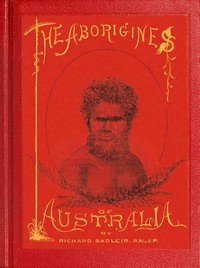
The Aborigines of Australia by R.N. Richard Sadleir
I picked up this book expecting a dry historical account, but it turned out to be something much more complex. Published in 1869, it's a product of its time in every sense of the word.
The Story
There isn't a plot in the traditional way. Think of it as a guidebook written by an outsider. Richard Sadleir, after his naval career, tried to compile everything known (or believed) about Aboriginal Australians. He writes chapters on their physical appearance, languages, hunting methods, and spiritual beliefs. He describes boomerangs, canoes, and family structures. On the surface, it's a systematic catalog. But the 'story' is in the gaps and the perspective. He writes from the position of a British colonist, viewing Indigenous culture through a lens of curiosity mixed with a firm belief in European superiority. He often labels practices as 'simple' or 'primitive,' completely missing their depth and complexity.
Why You Should Read It
This isn't a book to read for accurate facts about Aboriginal cultures. We have far better, more respectful sources for that today. You read this to understand the mindset of the colonizer. It's a primary source that shows how prejudice was baked into so-called objective study. It made me angry and sad, but also thoughtful. It forces you to ask: Who gets to tell a people's story? What happens when that storyteller doesn't truly understand, or even respect, the subject? Reading Sadleir's confident, mistaken conclusions is a powerful lesson in checking your sources and listening to marginalized voices. It turns history from a list of dates into a living, breathing argument.
Final Verdict
This book is not for everyone. It's challenging and requires a critical eye. But if you're a student of history, colonialism, or anthropology, it's a revealing document. It's perfect for readers who want to go beyond textbooks and see the raw, unfiltered attitudes of the past. Pair it with modern works by Aboriginal authors to get the full picture. Think of it less as a book about Aboriginal Australians, and more as a stark lesson about how power shapes narrative. It's a difficult, important piece of the puzzle if you want to understand Australia's history.
This title is part of the public domain archive. It serves as a testament to our shared literary heritage.
Jessica Wilson
1 month agoI found the data interpretation to be highly professional and unbiased.
Emily Garcia
1 year agoI've gone through the entire material twice now, and the critical analysis of current industry standards is very timely. It’s hard to find this much value in a single source these days.
Jessica Lee
2 months agoThe layout of the digital version made it easy to start immediately, the way it handles controversial points with balance is quite professional. It cleared up a lot of the confusion I had previously.
Thomas Martinez
7 months agoThe author provides a very nuanced critique of current methodologies.



Elizabeth Moore
1 year agoI took detailed notes while reading through the chapters and the objective evaluation of the pros and cons is very refreshing. A rare gem in a sea of mediocre content.