
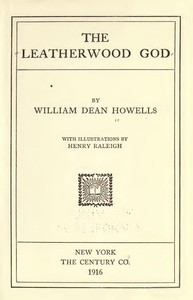
The Leatherwood God by William Dean Howells
If you're looking for a historical novel that's less about fancy balls and more about the raw, muddy reality of frontier life, this is your book. William Dean Howells sets the scene perfectly in the backwoods of Ohio, where life is a daily struggle. The community of Leatherwood is ripe for something—anything—to break the monotony and hardship.
The Story
A mysterious man named Joseph Dylks arrives in Leatherwood. He's not particularly impressive to look at, but he speaks with a strange confidence and soon declares himself to be God incarnate. The claim is outrageous, but it finds a shocking number of believers. We see this unfold mainly through the eyes of Matthew Braile, a pragmatic and cynical local squire. He watches in disbelief as his friends, family, and neighbors are captivated by Dylks's promises and warnings. The town splits into fervent believers and angry skeptics, creating a tense and sometimes dangerous divide. The plot follows the rise and inevitable challenges of this self-proclaimed deity, asking what will happen when his promises don't come true.
Why You Should Read It
This isn't a dry history lesson. Howells makes you feel the grime of the frontier and the palpable hunger in the air—not just for food, but for meaning. Dylks is a fantastic character because he's not a cartoon villain. He's unsettlingly ordinary, which makes the devotion he inspires even more compelling. The real heart of the book is in the believers. Howells treats them with empathy, showing how their hard lives and deep fears make them vulnerable to a powerful story. It's a gentle but sharp exploration of crowd psychology, faith, and the need for hope, all wrapped up in a genuinely suspenseful story. You'll find yourself wondering, 'What would I have believed?'
Final Verdict
Perfect for readers who love character-driven historical fiction with a psychological edge. If you enjoyed the moral complexities of The Scarlet Letter or the frontier atmosphere of some of Willa Cather's work, you'll find a lot to like here. It's also a great pick for anyone interested in the history of American religion and the sometimes-strange beliefs that took root on the frontier. Fair warning: it's a product of its time (published in 1916), so the pacing is thoughtful, not frantic. But if you settle into its rhythm, you'll be rewarded with a story that feels surprisingly modern in its questions about truth, belief, and what we cling to in hard times.
This digital edition is based on a public domain text. Knowledge should be free and accessible.
Andrew Harris
5 months agoThis book was worth my time since the storytelling feels authentic and emotionally grounded. A valuable addition to my collection.
Melissa Gonzalez
1 year agoRead this on my tablet, looks great.
Emily Harris
9 months agoWithout a doubt, the atmosphere created is totally immersive. Absolutely essential reading.
Matthew Smith
9 months agoText is crisp, making it easy to focus.







Susan Williams
6 months agoAfter finishing this book, the content flows smoothly from one chapter to the next. Definitely a 5-star read.