
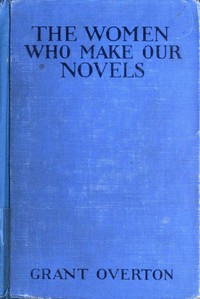
The Women Who Make Our Novels by Grant M. Overton
Published in 1918, Grant Overton's The Women Who Make Our Novels is exactly what the title promises: a series of profiles on the leading female fiction writers of his day. Think of it as a curated author spotlight from a century ago. Overton covers a wide range, from literary giants like Edith Wharton and Willa Cather to phenomenally popular authors like Gene Stratton-Porter and Mary Roberts Rinehart. He doesn't just list their books; he tries to sketch a portrait of the writer as a person. He talks about their backgrounds, their inspirations, and their unique approaches to crafting stories. The book acts as both a guide for readers curious about their favorite authors and a snapshot of the literary landscape when these women were at the peak of their powers.
Why You Should Read It
What makes this old book feel so relevant is its focus on the person behind the page. Overton isn't interested in stuffy academic analysis. He's fascinated by how life shapes art. Reading about Willa Cather's Nebraska childhood illuminating her prairie novels, or how Mary Roberts Rinehart's training as a nurse informed her mysteries, adds a rich layer of context. You get a real sense of these women as working professionals and artists, grappling with ideas and building careers. It's a celebration of their craft and their success, written with clear admiration. For anyone who loves classic American novels, this feels like getting the director's commentary track for a whole era of literature.
Final Verdict
This book is a treat for readers who love classic American fiction and literary history. It's perfect if you've ever finished a novel by Wharton or Cather and immediately wanted to know more about the mind that created it. It’s also a great pick for writers curious about the creative processes of masters. The style is conversational and accessible—no PhD required. Just be prepared for a period piece; the language and some viewpoints are firmly of its 1918 time. But that’s also its charm. The Women Who Make Our Novels is less a critical study and more an enthusiastic fan letter to a generation of groundbreaking authors, and that passion is contagious.
This publication is available for unrestricted use. Knowledge should be free and accessible.
Michael Anderson
6 months agoThis digital copy caught my eye due to its reputation, the narrative arc keeps the reader engaged while delivering factual content. A solid investment for anyone's personal development.
Joseph Allen
1 year agoI have to admit, the depth of research presented here is truly commendable. Definitely a 5-star read.
William Anderson
6 months agoHaving read this twice, the narrative structure is incredibly compelling. Absolutely essential reading.
Deborah Hill
10 months agoBased on the summary, I decided to read it and the arguments are well-supported by credible references. I will read more from this author.



Paul Wilson
1 year agoThe digital index is well-organized, making research much faster.